Keep the servers alive.
Everything you need to survive your first run — what to place, what traffic wants, and how your score ends up on the leaderboard.
Start Here
Connect a Solana wallet (Phantom) from the header, then hit Launch console to open the game. The console runs in your browser — no download.
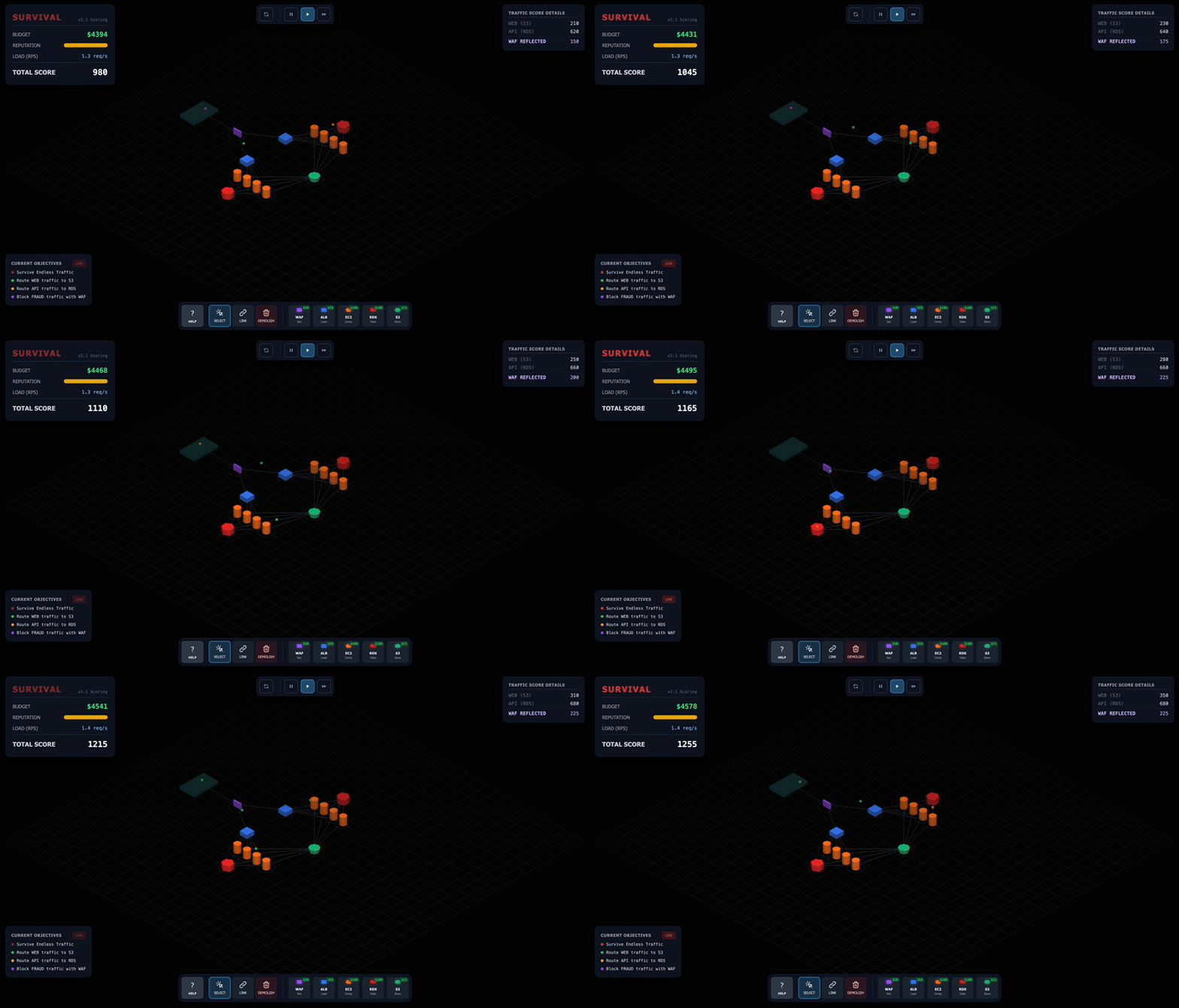
You start with a budget and one goal: keep serving requests as traffic ramps up forever. There’s no win state — only how long you last, and how high your score climbs before you don’t.
The Services
13 building blocks, same ones a real backend runs on. Place them, connect them, upgrade the ones under load.
First line of defense. Blocks malicious traffic before it reaches anything else.
Spreads incoming requests across your Compute instances.
Processes requests. Upgradeable through 3 tiers for more capacity.
Destination for reads, writes and searches. Expensive but essential.
Handles static content and uploads.
Caches static content at the edge — very high cache-hit rate.
Cuts DB load by caching hot responses.
Buffers bursts so spikes don’t drop requests.
Rate-limits traffic; throttled requests cost less reputation than failures.
Fast reads/writes, but can’t serve search queries.
Purpose-built for search — 3x faster than the SQL path.
Offloads reads from your primary DB. Needs a DB to attach to.
Auto-scales, low upkeep, but pays per request — great for spiky traffic.
Traffic Types
Requests arrive in six flavors. Route the right ones to the right services, or watch reputation drain.
Cacheable GET requests. Route to CDN for the cheapest win.
Database reads. Cache hits save real money here.
Never cacheable — hits your DB directly every time.
File writes, destined for storage.
Expensive to process; a Search Engine node pays for itself fast.
Hides among the rest. Undetected, it bleeds reputation fast.
Survival Mechanics
Request rate climbs the longer you survive. On top of that, expect DDoS spikes, cost surges, and random service outages — services also degrade over time and need repair.
Every few minutes the traffic mix shifts (an API-heavy stretch, a storage surge, a search storm) — the base you built for last minute’s traffic might not fit this minute’s.
Scoring & Leaderboard
Your run ends when reputation hits zero or your budget goes deep enough negative. When it does, your final score, survival time, and run data get signed with your wallet and submitted to the server.
The server verifies your signature, runs a plausibility check on the run (score-vs-time, event density, and a few other bounds), then writes it to the global leaderboard — no separate account needed, your wallet is your identity.
Tips
- Cache what you can — CDN and Memory Cache pay for themselves fast on STATIC/READ-heavy stretches.
- WRITE traffic always hits the DB. Size it before you need it, not after.
- Throttled requests (via API Gateway) cost less reputation than outright failures — rate limit before you drop.
- Upkeep scales the longer you survive. A stack that was profitable at minute 2 can bankrupt you by minute 8.